Pest & Disease Risk Guide for Southeast Specialty Crops
Field-ready summary of the seven pest and disease pressures BAU's Pest Watch tool tracks: crops affected, weather conditions that trigger risk, and first-response actions for Southeast growers.
Most specialty-crop losses in USDA Zones 7–9 don't come from surprise pests — they come from weather windows that predictably favor a pathogen or insect the grower already knows about. Late blight, downy mildew, and bacterial spot each have a temperature-and-moisture fingerprint. If you can read the forecast against that fingerprint, you can spray before infection, not after.
This guide summarizes the seven pest and disease pressures BAU's Pest Watch tool watches for automatically — what triggers each, which crops are at risk, and the first action to take.
The seven risks we track
Late blight (Phytophthora infestans)
- Crops affected:
- Tomato, potato
- Weather trigger:
- 2+ consecutive days with lows 50–80°F and ≥10 hours of leaf wetness (RH ≥ 90%).
- First action:
- Scout lower leaves daily. Apply preventive copper or chlorothalonil before the next wet window — curative sprays rarely catch it.
Early blight & Septoria leaf spot
- Crops affected:
- Tomato, pepper, eggplant
- Weather trigger:
- 2+ warm wet days (75–90°F highs) with leaf wetness and ≥0.1″ rainfall.
- First action:
- Mulch to block soil splash, prune lower foliage for airflow, rotate fungicides (mancozeb / chlorothalonil) on a 7–10 day schedule.
Cucurbit downy mildew
- Crops affected:
- Cucumber, melon, watermelon, squash, pumpkin
- Weather trigger:
- Cool nights (lows 50–70°F) with 6+ hours of leaf wetness for 2+ consecutive days.
- First action:
- Check the ipmPIPE cucurbit downy mildew forecast. Apply preventive mefenoxam or oxathiapiprolin and open canopy for airflow.
Powdery mildew
- Crops affected:
- Cucurbits, peppers, tomatoes
- Weather trigger:
- 3+ days with highs 68–88°F, humidity ≥ 70%, and no washing rainfall (<0.1″).
- First action:
- Apply potassium bicarbonate, sulfur (skip if temps >90°F), or a labeled biofungicide. Thin canopy so leaves dry by midday.
Bacterial spot & speck
- Crops affected:
- Tomato, pepper
- Weather trigger:
- 2+ warm days (highs ≥ 75°F) with heavy rainfall (≥0.3″) — splash disperses bacteria.
- First action:
- Apply a fixed copper + mancozeb tank mix. Do not work fields when foliage is wet — hands and equipment spread it plant to plant.
Heat stress (pollen sterility, blossom drop)
- Crops affected:
- Tomato, pepper, bean, cucurbits, brassicas, greens
- Weather trigger:
- 2+ consecutive days with highs ≥ 95°F.
- First action:
- Irrigate early morning, apply 30% shade cloth on tender crops, and harvest greens before the afternoon peak.
Aphid & thrips pressure
- Crops affected:
- Greens, brassicas, solanaceae, cucurbits, beans
- Weather trigger:
- 4+ mild dry days (highs 65–82°F, no rainfall) — no rain to knock populations back.
- First action:
- Scout leaf undersides. Release lacewings or apply insecticidal soap once thresholds are exceeded; rotate modes of action to slow resistance.
Crop-specific checklists
Use these quick-reference checklists during weekly walk-throughs. Each row pairs a weather trigger with the first action to take — designed to be scannable on your phone in the field.
Tomato
| Risk | Weather trigger | First action |
|---|---|---|
| Late blight | 2+ days, lows 50–80°F + ≥10 hrs leaf wetness (RH ≥ 90%). | Preventive copper or chlorothalonil before the next wet window. |
| Early blight / Septoria | 2+ warm wet days (75–90°F) with ≥0.1″ rain. | Mulch to block soil splash, prune lower leaves, rotate mancozeb/chlorothalonil on 7–10 day schedule. |
| Bacterial spot & speck | Warm days (≥75°F) with heavy rain (≥0.3″). | Fixed copper + mancozeb; never work wet foliage. |
| Powdery mildew | 3+ days, 68–88°F, RH ≥ 70%, <0.1″ rain. | Potassium bicarbonate or sulfur (skip >90°F); thin canopy. |
| Heat stress / blossom drop | 2+ days with highs ≥ 95°F. | Early-morning irrigation; 30% shade cloth over flowering plants. |
Pepper
| Risk | Weather trigger | First action |
|---|---|---|
| Bacterial spot | Warm days (≥75°F) with heavy rain (≥0.3″). | Fixed copper + mancozeb; stay out of wet fields. |
| Early blight / Septoria | 2+ warm wet days with leaf wetness. | Prune for airflow, mulch, rotate protectant fungicides. |
| Powdery mildew | 3+ days, 68–88°F, RH ≥ 70%, dry. | Potassium bicarbonate or biofungicide; open canopy. |
| Heat stress / pollen sterility | 2+ days ≥ 95°F. | Shade cloth, deep morning irrigation; expect flower drop. |
| Aphids & thrips (TSWV vector) | 4+ mild dry days, 65–82°F. | Scout undersides; insecticidal soap or spinosad, rotate modes. |
Eggplant
| Risk | Weather trigger | First action |
|---|---|---|
| Early blight / Phomopsis | 2+ warm wet days (75–90°F) with leaf wetness. | Rotate mancozeb/chlorothalonil; remove infected fruit promptly. |
| Bacterial spot | Warm days ≥ 75°F with heavy rain. | Fixed copper; avoid overhead irrigation. |
| Flea beetles | 4+ mild dry days after transplant. | Row cover until flowering; spinosad or pyrethrin at threshold. |
| Aphids & thrips | 4+ mild dry days, 65–82°F, no rain. | Insecticidal soap; release lacewings; rotate MoA. |
Cucurbits (cucumber, melon, squash, pumpkin)
| Risk | Weather trigger | First action |
|---|---|---|
| Cucurbit downy mildew | Lows 50–70°F with 6+ hrs leaf wetness for 2+ days. | Check ipmPIPE forecast; preventive mefenoxam or oxathiapiprolin. |
| Powdery mildew | 3+ days, 68–88°F, RH ≥ 70%, dry. | Potassium bicarbonate/sulfur (skip >90°F); thin canopy. |
| Bacterial wilt (cucumber beetle vector) | Warm days with cucumber beetle sightings. | Row cover until bloom; scout & treat beetles at 1/plant threshold. |
| Squash vine borer / squash bug | Warm dry stretch during bloom (summer squash). | Scout stems for frass; pyrethrin at base weekly during flight. |
| Heat stress / fruit abortion | 2+ days ≥ 95°F during flowering. | Morning irrigation; keep bees active with shaded staging. |
Greens (lettuce, spinach, kale, chard)
| Risk | Weather trigger | First action |
|---|---|---|
| Downy mildew (lettuce/spinach) | Cool nights 50–70°F with 6+ hrs leaf wetness. | Resistant varieties; preventive phosphonate; harvest ahead of infection. |
| Bacterial leaf spot | Warm days (≥75°F) with heavy rain. | Fixed copper; wider spacing; drip instead of overhead. |
| Aphids & thrips | 4+ mild dry days, 65–82°F. | Insecticidal soap or spinosad; row cover on tender greens. |
| Heat stress / bolting & tipburn | 2+ days ≥ 95°F, or highs sustained >85°F. | 30–50% shade cloth; irrigate at dawn; harvest before the peak. |
Symptom photo guide
Use these photo references during scouting. Match what you see in the field against the sign, then check the weather trigger — if the trigger also fits, act on the first action from the checklist above.
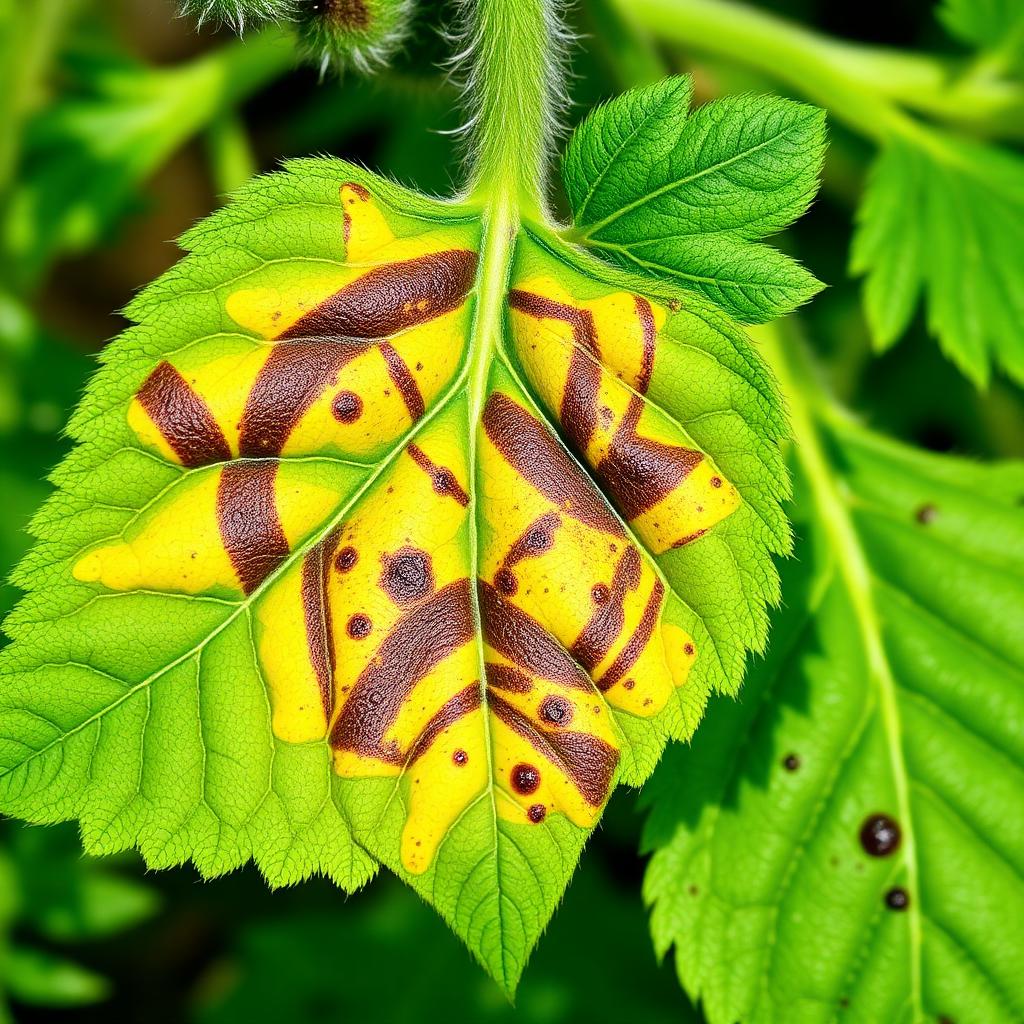
Tomato
- Concentric dark rings on lower leavesLikely: Early blight / Septoria leaf spotTrigger to confirm: Warm wet days with ≥0.1″ rain
- Yellowing between veins, brown edgesLikely: Early blight advancing upwardTrigger to confirm: Repeated leaf-wetness windows
- Small dark water-soaked spotsLikely: Bacterial spot / speckTrigger to confirm: Warm days ≥75°F with heavy rain (≥0.3″)
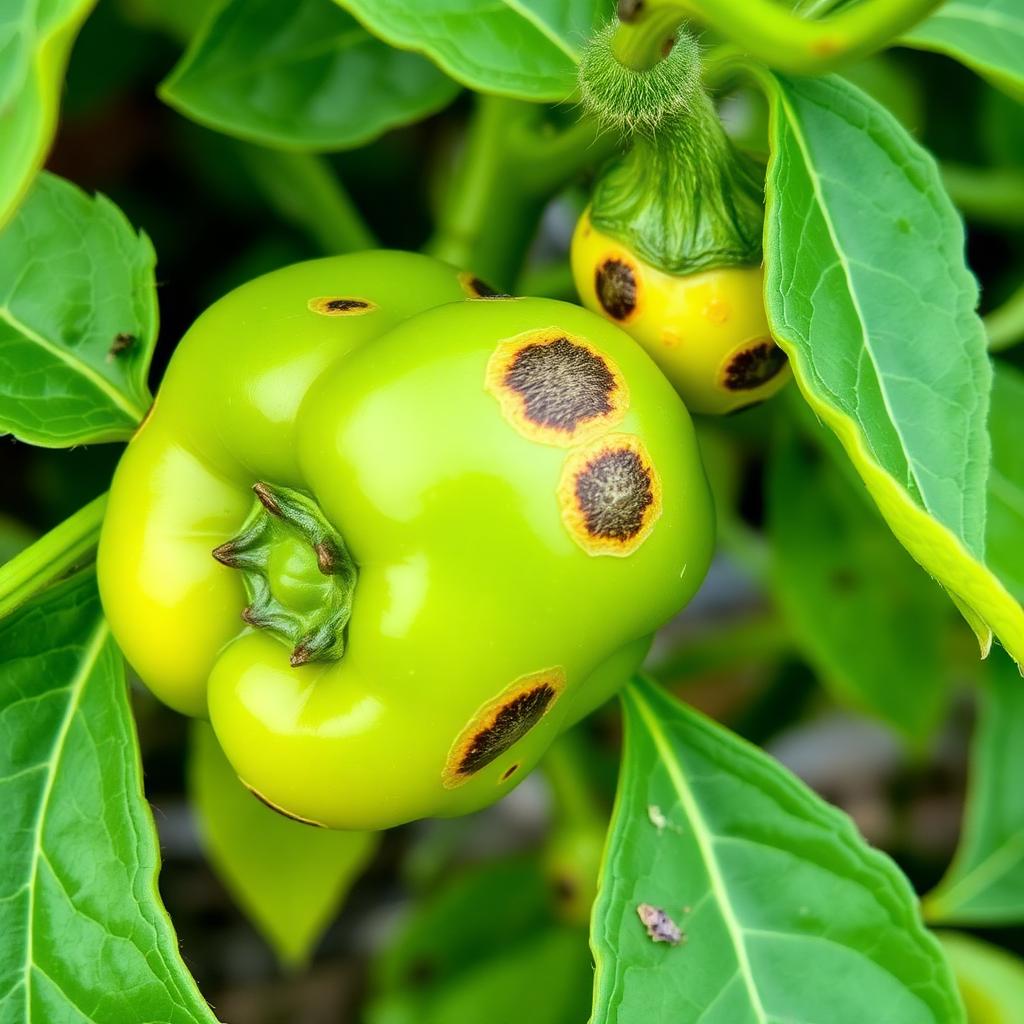
Pepper
- Sunken corky brown spots on fruitLikely: Bacterial spot (fruit stage)Trigger to confirm: Warm rain-driven splash events
- Small angular leaf lesionsLikely: Bacterial spot (foliar)Trigger to confirm: Warm wet days, working wet fields
- Flower drop with no fruit setLikely: Heat stress / pollen sterilityTrigger to confirm: 2+ days ≥ 95°F
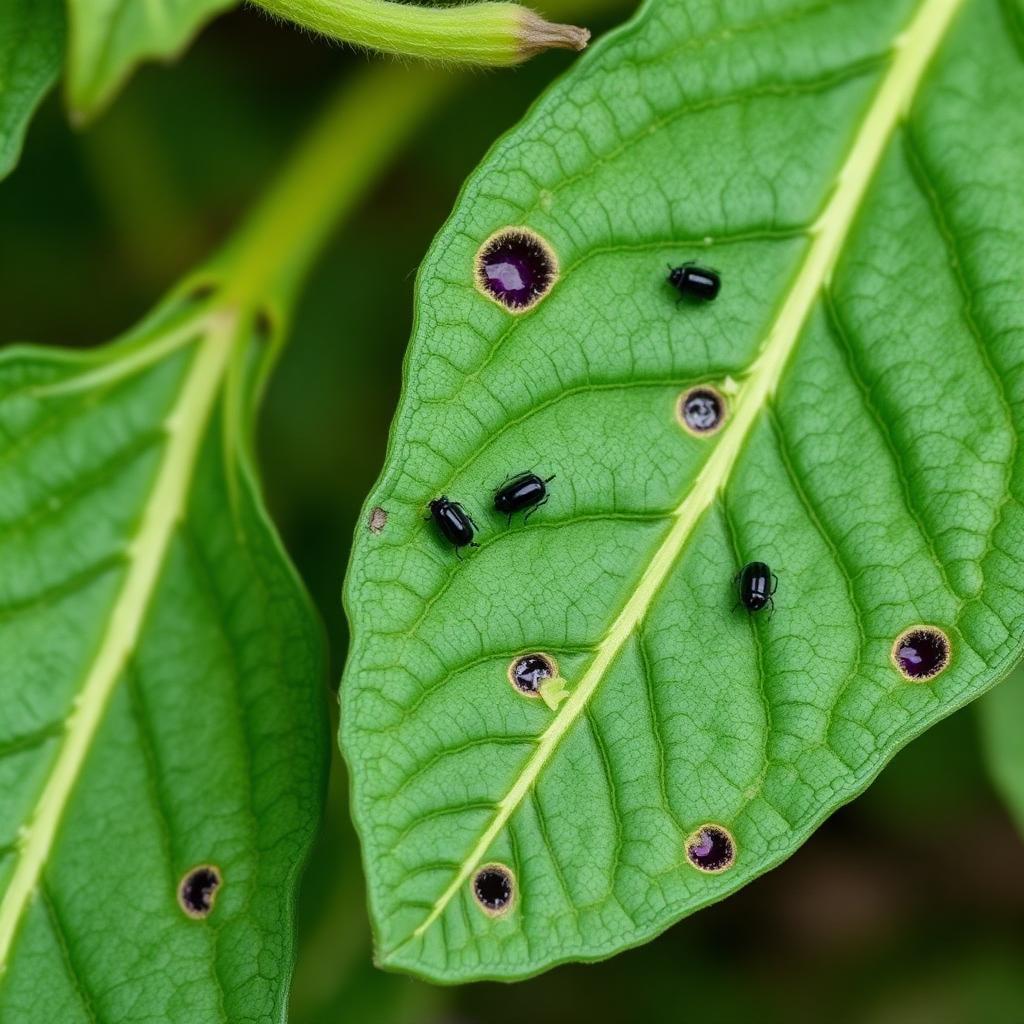
Eggplant
- Round shot-hole punctures across leavesLikely: Flea beetle feedingTrigger to confirm: 4+ mild dry days after transplant
- Tiny black jumping beetles on foliageLikely: Flea beetle adults activeTrigger to confirm: Warm dry stretch, no rain to knock down
- Sunken dark spots on fruitLikely: Phomopsis / early blight complexTrigger to confirm: Warm wet days with leaf wetness
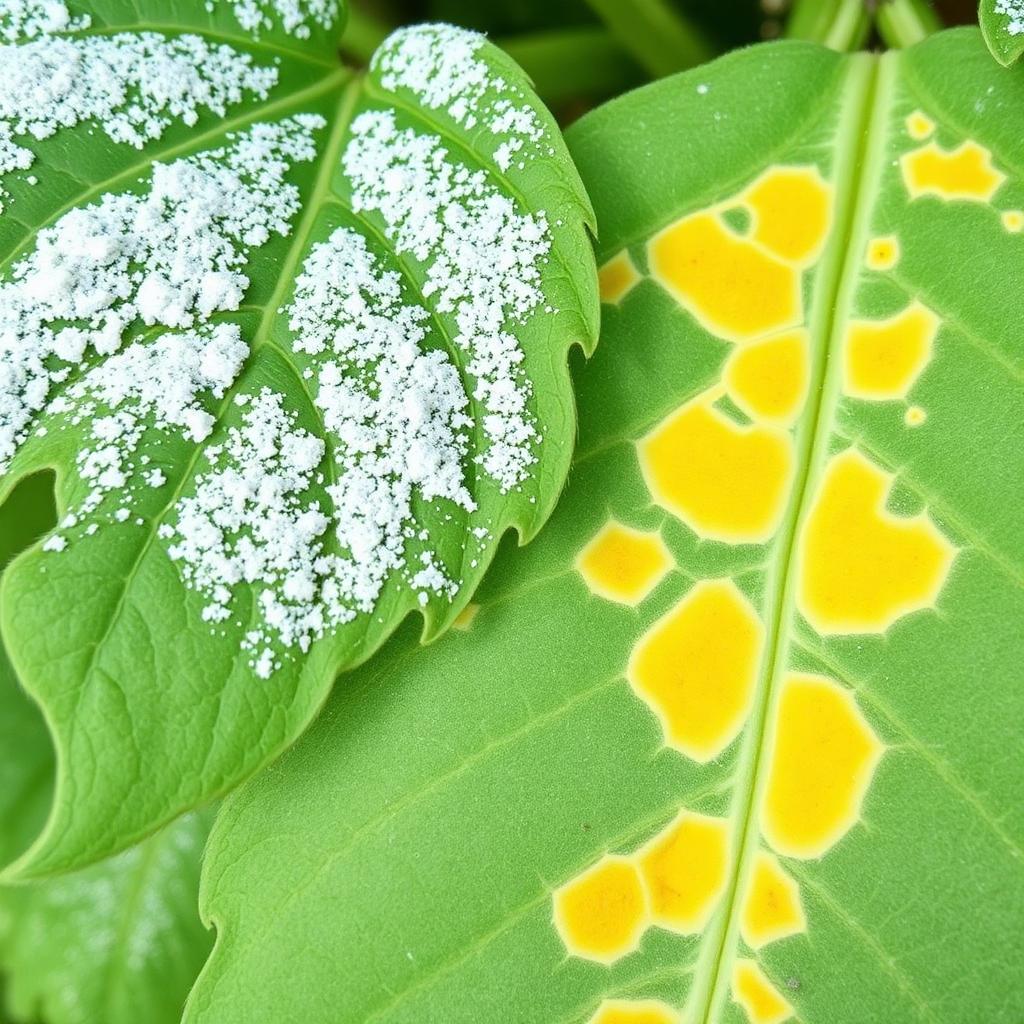
Cucurbits
- White powdery coating on leaf surfaceLikely: Powdery mildewTrigger to confirm: 3+ days 68–88°F, RH ≥ 70%, dry
- Angular yellow patches bounded by veinsLikely: Downy mildewTrigger to confirm: Cool nights 50–70°F with 6+ hrs leaf wetness
- Sudden wilt with intact green leavesLikely: Bacterial wilt (cucumber beetle vector)Trigger to confirm: Warm days with beetle sightings
Greens
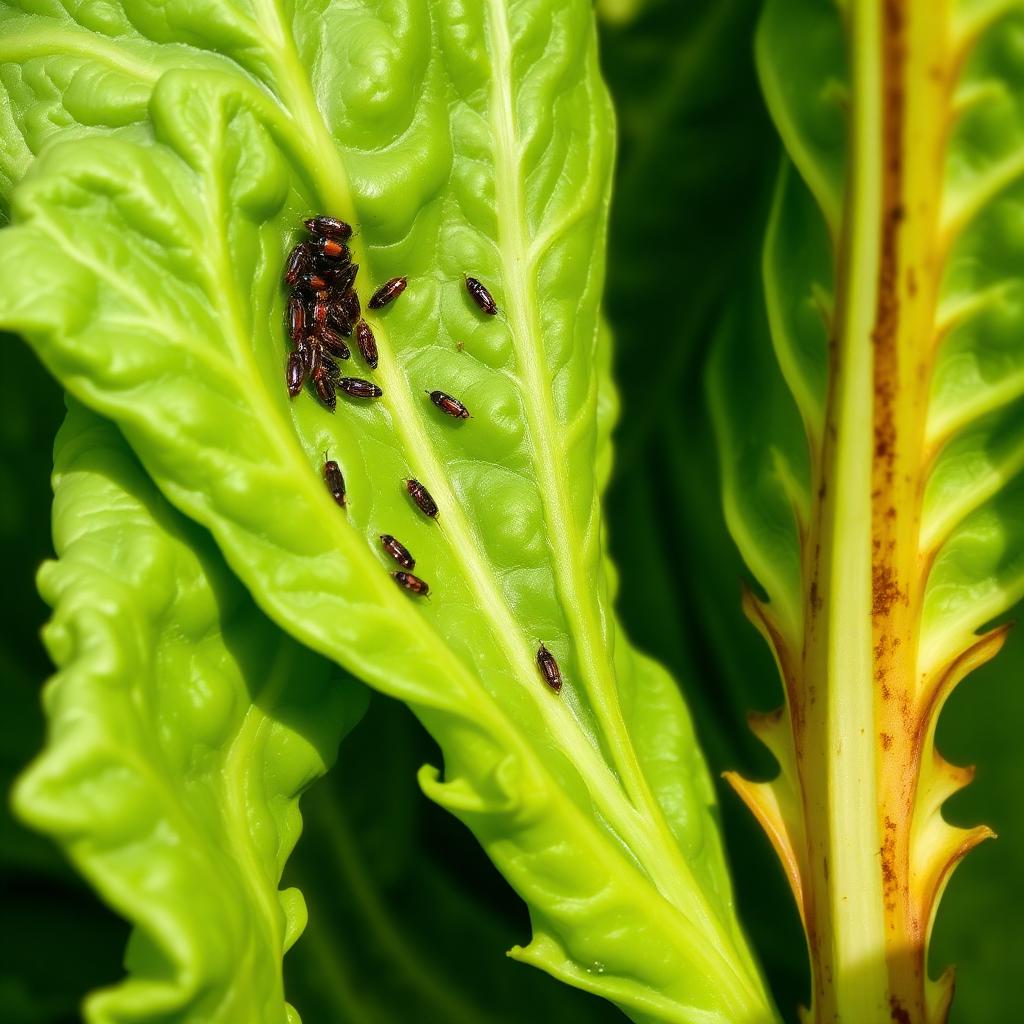
- Clustered insects on leaf undersideLikely: Aphid colonyTrigger to confirm: 4+ mild dry days, 65–82°F
- Brown crispy leaf marginsLikely: Tipburn / heat stressTrigger to confirm: Highs sustained > 85°F or 2+ days ≥ 95°F
- Yellow patches with fuzzy undersideLikely: Downy mildew (lettuce/spinach)Trigger to confirm: Cool nights + 6+ hrs leaf wetness
Photos are reference illustrations. For confirmed diagnosis on ambiguous cases, send a sample to your state extension plant disease clinic (NCSU, Clemson, UGA, UT, Auburn, UF).
Next 7-day action timeline
A worked example of how a typical Southeast summer week translates weather triggers into daily actions. Swap in your own forecast — the pattern (wet window → preventive spray → drying window → heat push → new wet window) repeats through the season.
Day 1 — Mon
High 88°F / low 68°F, RH 78%, 0.2″ rain overnight, 8 hrs leaf wetness.- Early blight / Septoria window opens
- Bacterial spot risk on tomato & pepper
- Walk tomato & pepper blocks at dawn — flag lower-leaf lesions.
- Tank-mix fixed copper + mancozeb on solanaceae before the next wet cycle.
- Stay out of wet fields; postpone tying/pruning until foliage is dry.
Day 2 — Tue
High 84°F / low 66°F, RH 85%, 0.1″ rain, 10 hrs leaf wetness.- Late blight (tomato) — 2nd consecutive wet day
- Cucurbit downy mildew watch
- Apply preventive chlorothalonil or copper on tomato before evening dew.
- Check the ipmPIPE cucurbit downy mildew map; pre-treat cucumber & melon if a county alert is active.
- Log applications with REI/PHI in the Chemical & Fertilizer Log.
Day 3 — Wed
High 90°F / low 70°F, RH 65%, no rain, drying wind.- Drying window — safe for pruning & harvest
- Prune tomato lower foliage and de-sucker for airflow.
- Harvest ripe fruit and cool immediately — heat is climbing.
- Refresh mulch on tomato/pepper rows to block soil splash before the next rain.
Day 4 — Thu
High 95°F / low 74°F, RH 55%, no rain.- Heat stress day 1 — pollen sterility watch
- Irrigate deeply at dawn on pepper, tomato, cucurbits.
- Deploy 30% shade cloth on flowering pepper and tender greens.
- Harvest greens before 11 a.m. and hydro-cool.
Day 5 — Fri
High 96°F / low 75°F, RH 58%, no rain.- Heat stress day 2 — blossom drop likely
- Aphid/thrips building in dry stretch
- Expect flower drop on pepper — do not panic-spray; keep water on.
- Scout greens & brassica undersides for aphids; release lacewings or apply insecticidal soap at threshold.
- Skip sulfur on cucurbits — phytotoxic above 90°F.
Day 6 — Sat
High 87°F / low 70°F, RH 72%, 0.05″ scattered showers.- Powdery mildew window (warm, humid, still mostly dry)
- Apply potassium bicarbonate or a labeled biofungicide on cucurbits & squash.
- Thin cucurbit canopy so leaves dry by midday.
- Re-scout tomato for early blight progression from Day 1–2 wet cycle.
Day 7 — Sun
High 82°F / low 65°F, RH 90%, 0.4″ rain forecast overnight.- Bacterial spot splash event
- Late blight wet-window reopens
- Pre-treat tomato & pepper with fixed copper before the evening front arrives.
- Do NOT work fields tomorrow morning while foliage is wet — bacteria spread on hands & tools.
- Plan Monday's scout route: tomato → pepper → cucurbits, lowest-elevation blocks first.
This is a reference week, not a forecast. Sign in to Pest Watch to generate the same day-by-day plan against your farm's live 7-day forecast and active plantings.
How BAU's Pest Watch automates this
Pest Watch pulls your farm's 7-day forecast (temperatures, precipitation, hourly humidity for a leaf-wetness proxy) and evaluates it against the rules above for the crops you have in the ground. You get a severity-ranked list of risks with the date window, the reason, and the recommended action — no manual scouting log needed to catch the pattern.
Pest Watch lives inside your BAU dashboard. Sign in and connect a farm location and at least one active planting to see live risk flags for your fields.
Open Pest Watch
Live 7-day risk flags for the crops you have in the ground.
What this guide is not
A weather-based risk model tells you when conditions favor a pathogen — it does not replace field scouting or a diagnostic lab. For confirmed identification, send samples to your state extension plant disease clinic (NCSU, Clemson, UGA, UT, Auburn, UF). Always follow the pesticide label — REI, PHI, and rate limits are legal requirements, not suggestions.
Run this in BAU, not a spreadsheet
The planner, calculator, and buyer marketplace are included on every plan.